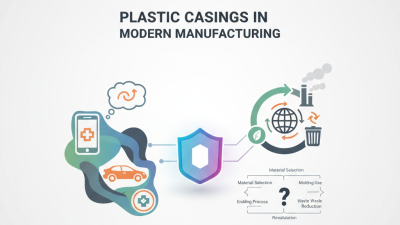
How to Choose the Best Plastic Casings for Your Needs?
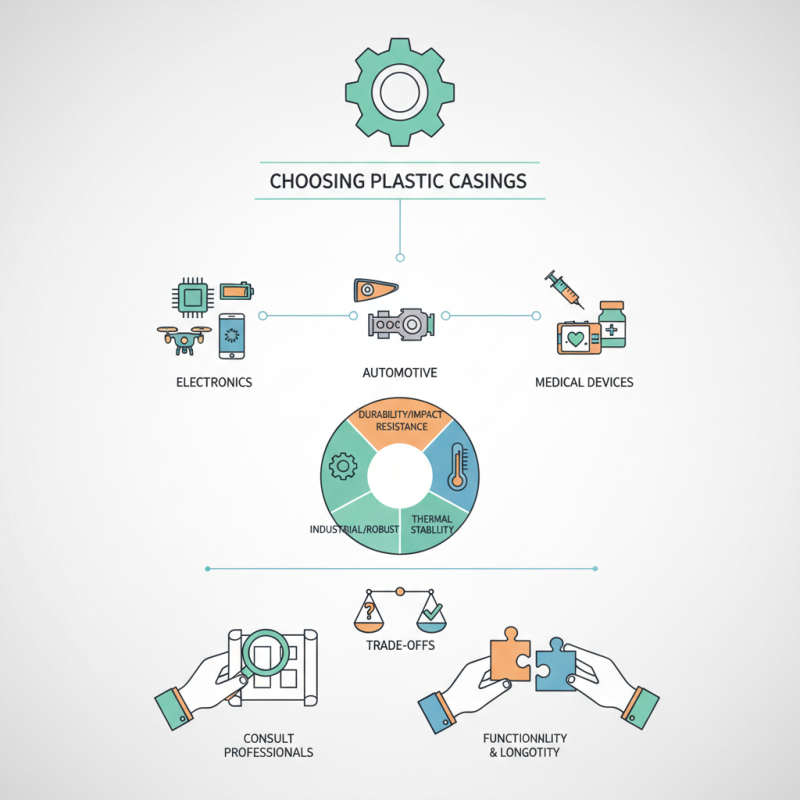
Selecting the right plastic casings is crucial for various applications. Whether for electronics, automotive parts, or medical devices, the choices can be overwhelming. Understanding your specific needs and the characteristics of different plastic materials will help you make informed decisions.
Plastic casings come in various types, each designed for unique environments. Considerations such as durability, impact resistance, and thermal stability are important. Each project's requirements may lead to varied preferences. For example, lightweight plastics may benefit portable devices, while robust casings are better for industrial applications.
Expertise in material properties can elevate your project. Consulting with seasoned professionals or manufacturers ensures you choose the best fit. Nonetheless, every selection involves trade-offs. The ideal casing might not exist, highlighting the importance of thoughtful evaluation. Your choices shape functionality and longevity, making this decision vital.
Understanding Different Types of Plastic Casings Available in the Market
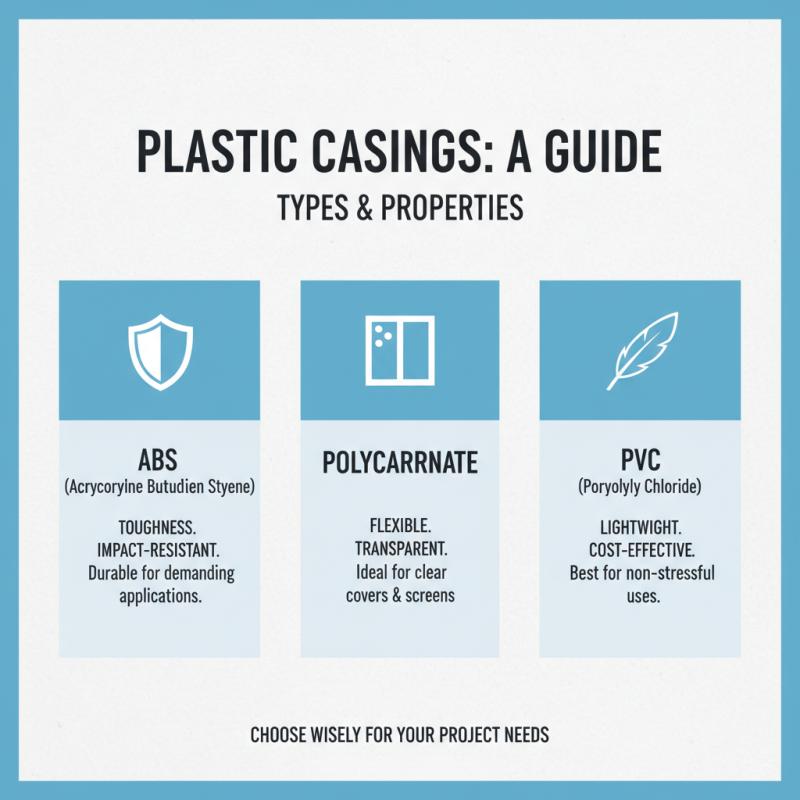
When selecting plastic casings, understanding the types available is crucial. There are various materials like ABS, polycarbonate, and PVC. Each type exhibits unique qualities. For example, ABS is known for its toughness and impact resistance. Polycarbonate is more flexible and offers excellent transparency. PVC is ideal for lightweight applications but can be less durable under stress.
Tips: Evaluate the environment where the casing will be used. If exposure to chemicals or extreme weather is likely, choose materials that resist such conditions. A common mistake is prioritizing cost over durability. Short-term savings can lead to higher replacement costs.
Another factor to consider is the design complexity. Some plastics can be easily molded into intricate shapes. Others may struggle with precision. Consider if the casing must have cutouts or specific dimensions. Additionally, be mindful of the thickness. Thinner casings can save weight but may not offer the necessary protection.
Tips: Always request samples before finalizing your choice. This helps assess the material’s feel and strength. It’s often helpful to reflect on past projects. Analyzing previous mistakes can lead to better decisions in the future.
Evaluating the Key Characteristics of Plastic Casings for Your Purpose
When selecting plastic casings, evaluating their key characteristics is essential. A primary factor to consider is material durability. Different plastics offer various levels of resistance to impact, temperature, and chemicals. For example, polypropylene is lightweight but less durable than polycarbonate. Understanding these properties helps in making informed choices.
The design of the casing also plays a critical role. A well-designed casing can save space and enhance functionality. Consider the method of closure, ventilation features, and mounting capabilities. These elements can significantly affect usability. It's not uncommon for a perfectly sized casing to fall short in performance due to poor design choices.
Remember, not all casings are created equal. Reflecting on real-world applications is vital. You may find a casing that fits perfectly but fails under specific conditions. Testing prototypes before finalizing your choice can save time and resources. Prioritize both physical characteristics and practical application to find the best plastic casing for your needs.
Assessing Environmental Considerations for Plastic Casing Selection
When selecting plastic casings, environmental considerations are crucial. Understanding the material's impact helps in making sustainable choices. One aspect to evaluate is its durability against environmental stressors like UV exposure, moisture, and temperature fluctuations. These factors influence the lifespan and performance, directly relating to waste reduction.
Another point to consider is recyclability. Many plastics are not biodegradable and can contribute to pollution. Choosing casings made from recyclable materials can mitigate negative impacts. Look for options labeled with recycling codes. Awareness of local recycling capabilities is beneficial for effective disposal.
It’s important to reflect on the production process as well. Some plastics consume significant energy and emit greenhouse gases during manufacture. Evaluating a casing's carbon footprint requires honest scrutiny. Consider the balance between functionality and environmental responsibility. Not all plastic options fit every need, and sometimes compromises are necessary.
Comparing Cost vs. Quality in Plastic Casing Options
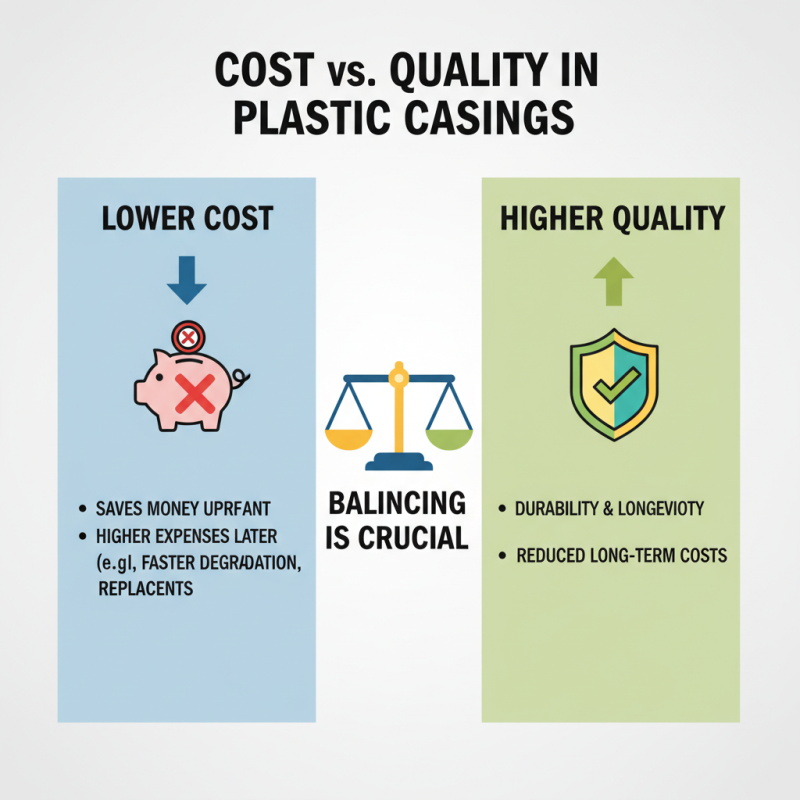
When selecting plastic casings, cost and quality are key considerations. Cheaper options may save money upfront but can lead to higher expenses later. For example, low-quality materials may degrade faster, requiring replacements. Balancing these factors is crucial.
Tips: Always check the warranty. A longer warranty often indicates better quality. Additionally, read customer reviews for real-world insights. Quality often shows in user experiences.
Certain projects demand high-quality materials, especially in harsh environments. Ensure the casing can withstand specific conditions. Remember, not all applications need top-tier quality. Sometimes, a mid-range option suffices, cutting costs without severe compromise.
Tip: Look for certifications. They provide assurance of durability and safety. Evaluate your specific needs carefully. A thoughtful approach to cost versus quality will lead to better choices. Reflect on past cases to improve future decisions.
Identifying Manufacturers and Suppliers for Reliable Plastic Casings
When choosing plastic casings, identifying reliable manufacturers and suppliers is crucial. Start by researching companies with a strong track record in the industry. Look for those with certifications that demonstrate quality standards. This will help ensure that the casings meet your requirements.
Check online reviews and testimonials. They provide insight into customer experiences and product durability. Engaging in forums related to plastic casings can also offer valuable feedback from other professionals. Additionally, consider suppliers who offer custom solutions. Tailored options can better meet your specific needs.
Request samples before making a bulk purchase. This allows you to evaluate the material's quality and suitability firsthand. Don't hesitate to ask manufacturers about their production processes. Transparency is key in establishing trust. Recognizing the importance of sourcing from dependable suppliers can significantly impact your project's success.
How to Choose the Best Plastic Casings for Your Needs?
| Dimension | Material | Color Options | Application | Supplier Rating |
|---|---|---|---|---|
| 100mm x 50mm x 25mm | ABS | Black, White | Electronics | 4.5/5 |
| 150mm x 100mm x 50mm | Polycarbonate | Transparent | LED Lighting | 4.7/5 |
| 200mm x 150mm x 60mm | PVC | Gray, Blue | Industrial Use | 4.2/5 |
| 250mm x 200mm x 75mm | Polypropylene | Green | Packaging | 4.6/5 |
| 300mm x 250mm x 100mm | HIPS | Red, Yellow | Consumer Goods | 4.8/5 |
Related Posts
-
What is the Role of Plastic Casings in Modern Manufacturing?
-

Top Plastic Casings in Technology and Their Applications?
-

What is Casing Food and How is it Used in Culinary Practices?
-

10 Essential Tips for Using Mahogany Fibrous Casings Effectively
-

What is Meat in Netting and Why is it Popular in Cooking?
-
How to Choose the Right Fibrous Casings for Your Sausage Making?