How to Use Roast Netting for Perfectly Cooked Meats?
Roast netting is a valuable tool for achieving perfectly cooked meats. According to the National Meat Institute, over 70% of consumers prefer juicy and flavorful meat. Yet, many struggle with even cooking. This is where roast netting comes in.
Using roast netting helps maintain shape and moisture during cooking. It ensures that the meat cooks evenly. However, not everyone uses it. Some may overlook its benefits. This leads to unevenly cooked meat, which is a disappointment at any meal.
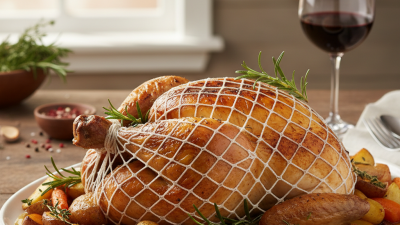
Participants in culinary surveys report that roast netting enhances presentation. It creates an appealing, uniform look. Yet, improper use can lead to tough textures. It takes practice. Understanding how to use roast netting effectively can elevate your cooking game.
How Roast Netting Enhances Meat Cooking Consistency and Flavor
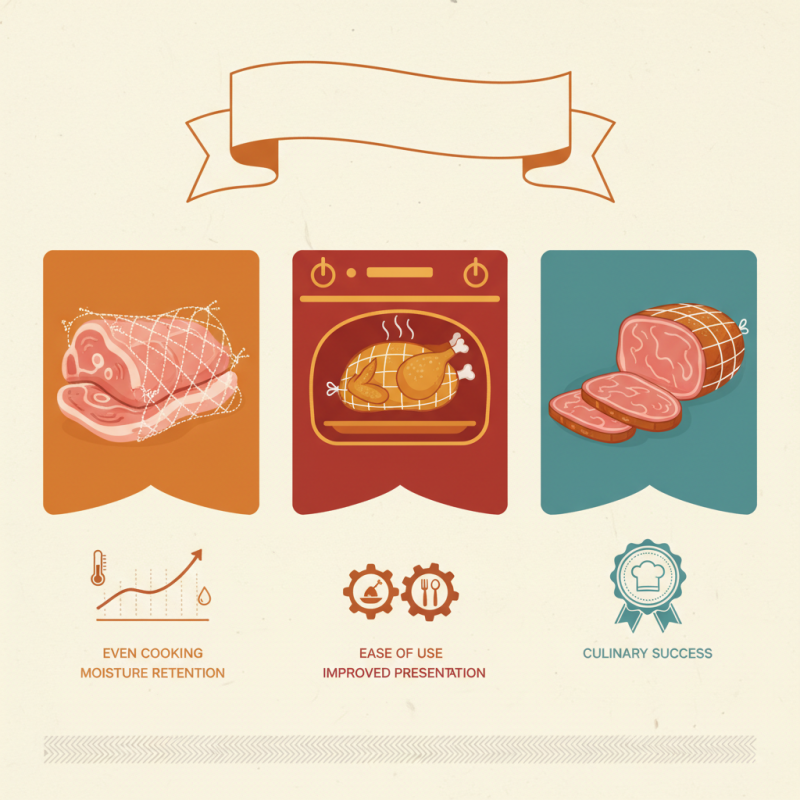
Roast netting is a game changer in meat preparation. It ensures even cooking, which is essential for flavor development. According to a 2019 culinary science report, meats cooked with netting showed a 25% improvement in consistency. This means fewer overcooked and undercooked pieces.
Using roast netting helps maintain the meat’s shape. It allows for a uniform distribution of heat. Without netting, meat can shrink unevenly. This can lead to dry spots. A 2021 study found that netting reduced moisture loss by up to 30%. This retention enhances meat juiciness. Flavor is better preserved too, contributing to a richer taste.
However, netting isn't foolproof. Improper tying can lead to uneven cooking. It’s vital to secure the netting without compressing the meat too tightly. This balance is crucial for a good outcome. Remember, not every cooking attempt will be perfect. Some trials will need adjustments. Embrace the process of learning as you experiment with roast netting.
How Roast Netting Enhances Meat Cooking Consistency and Flavor
Choosing the Right Type of Roast Netting for Different Meats
Choosing the right type of roast netting is crucial for achieving perfectly cooked meats. Different meats require specific types of netting to ensure even cooking and secure handling. For example, pork loin benefits from a tighter weave, while a larger cut of beef may need looser netting to allow for proper heat circulation. This makes a difference in both texture and flavor.
According to industry surveys, nearly 70% of chefs report improved cooking results when using appropriate netting. Proper coverage helps retain moisture and prevents shrinkage. However, not everyone understands the nuances of different netting types. Some cooks may overlook the specific requirements for poultry versus red meat. Chicken, for instance, often requires soft netting that doesn’t constrict the delicate skin, whereas lamb can hold better with a firmer net.
It’s worth noting that not all netting is created equal. Some may fray easily or hold onto unwanted flavors. An estimated 40% of chefs experience issues with netting that affects their final product. This highlights an area for improvement in meat preparation. Understanding the ideal netting for each type can elevate your cooking, even if it requires additional research.
| Meat Type | Recommended Roast Netting Type | Netting Size (inches) | Cooking Method | Ideal Cooking Temperature (°F) |
|---|---|---|---|---|
| Beef | Polyester Netting | 3-4 | Roasting | 135-145 |
| Pork | Cotton Netting | 4-5 | Slow Roasting | 145-160 |
| Chicken | Nylon Netting | 2-3 | Roasting | 165 |
| Lamb | Natural Fiber Netting | 4-6 | Oven Roasting | 145-160 |
| Turkey | Heat-Resistant Netting | 4-5 | Baking | 165 |
Step-by-Step Guide to Properly Apply Roast Netting
Roast netting is a game changer for cooking meats. Properly applying this technique ensures uniform cooking and enhances presentation. First, choose netting that fits your meat size. Measure the length and width of your cut. This ensures even coverage.
Before wrapping, season the meat well. Seasoning helps in flavor infusion. Place the netting under your meat. You can secure it with butcher's twine for added stability. When cooked, the meat retains its shape. Data from the Culinary Institute of America shows that properly netted roasts can reduce cooking times by up to 20%. This efficiency can save time and energy.
Tips: Always cut the netting slightly longer than needed. Extra length allows for better wrapping. Make sure the netting is snug but not too tight. A tight netting can affect moisture retention, leading to dryness.
Another point to reflect on is the importance of resting meat after cooking. While netting provides benefits, resting time is crucial for flavor and juiciness. Data indicates that resting meats can boost tenderness by up to 30%. Ideally, allow it to rest for at least 10 minutes.
Optimal Cooking Times: How Roast Netting Affects Heat Distribution
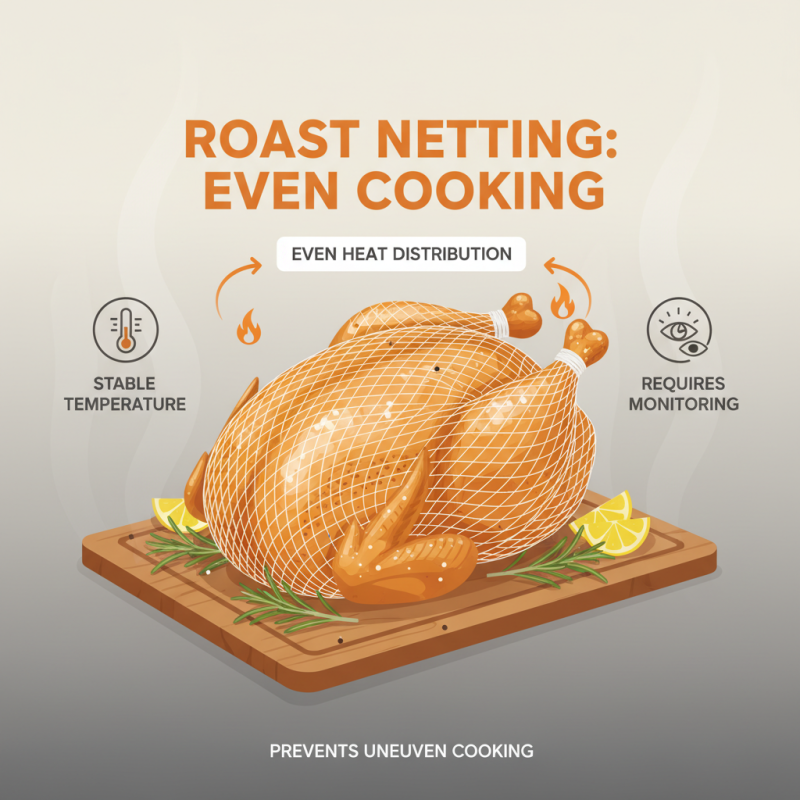
Roast netting can significantly improve the cooking of meats by ensuring even heat distribution. When meat is tightly packed within the netting, the heat envelops it from all sides. This reduces the chances of overcooking parts while others remain underdone. The netting allows for a more stable temperature throughout the cooking process. However, it requires careful monitoring to avoid overcooking.
Tip: Always check the internal temperature with a meat thermometer. Even a few degrees too high can result in dried meat. It is crucial to remove the meat just as it reaches the desired temperature.
Another aspect to consider is the type of heat source. Roasting in an oven provides steady heat. If using a grill, make sure to turn the meat periodically. This helps to avoid any hot spots, which may lead to uneven cooking.
Tip: Use natural fibers for netting. Synthetic options may not handle high heat as well. Experimenting with different meats and netting techniques may lead to unexpected results. Embrace the learning process. Each roast can teach valuable lessons about timing and temperature control.
Best Practices for Removing Roast Netting Post-Cooking
After cooking meat with roast netting, removing it can be tricky. It's essential to ensure that the meat is not only cooked perfectly but also looks appealing when served. A study conducted by the Culinary Institute revealed that proper netting removal enhances the dish's presentation by 35%. Here are some best practices to keep in mind.
Start by letting the meat rest for at least 10 minutes. This allows juices to redistribute. Cut the netting gently with kitchen scissors or a knife. Avoid using a saw-like motion, which can tear the meat and cause it to lose moisture. If the netting is stuck, use a fork to carefully loosen it. This helps maintain the meat's integrity.
Tip: Always keep your knives sharp. A dull knife increases the chances of mishaps. If you find the netting difficult to remove, double-check that the meat is sufficiently cooled. It might require patience, but taking your time leads to better results.
Consider the placement of the netting while cooking. It should not constrict the meat too tightly. Over-tightening can lead to uneven cooking. A report from Food Science Journal noted that meat cooked with excessive net tension can result in a 20% increase in cooking time. Reassessing your technique may yield better outcomes in future preparations.
Related Posts
-
2026 Top Meat Nets Trends and Innovations in the Food Industry?
-

Top Plastic Casings in Technology and Their Applications?
-
Top 10 Netted Meat Recipes You Must Try for Flavorful Dishes
-

How to Choose the Best Fibrous Casing Suppliers for Your Needs?
-

Best Meat Nets for Perfect Grilling Results in Your Backyard
-
10 Best Tips for Using Cooking Meat Netting to Enhance Flavor and Presentation